Yes. Both roles require nationally recognised safety training. Skylar Education offers dedicated courses for both the Emergency Warden and Chief Warden, as well as a combined programme covering both.
Workplace Emergency Warden
Lead with Confidence: Become a Certified Chief Warden and Ensure Safety in Emergencies
Duration
4 Hours (face to face) and 6 hours self-paced study for pre-learning
Cost
$150
Location
Delivery Mode
- Face-to-Face, Blended, Onsite training available for groups
Accredited

Workplace Emergency Warden
Course Dates
All LocationsMaidstoneBallaratSydneyGoulburnBrisbanePerthAdelaide
There are currently no openings available online for this course. Please enquire below here for more information on upcoming course dates.
There are currently no openings available online for this course. Please enquire below here for more information on upcoming course dates.
There are currently no openings available online for this course. Please enquire below here for more information on upcoming course dates.
There are currently no openings available online for this course. Please enquire below here for more information on upcoming course dates.
There are currently no openings available online for this course. Please enquire below here for more information on upcoming course dates.
There are currently no openings available online for this course. Please enquire below here for more information on upcoming course dates.
There are currently no openings available online for this course. Please enquire below here for more information on upcoming course dates.
There are currently no openings available online for this course. Please enquire below here for more information on upcoming course dates.
Workplace Emergency Warden overview
This Workplace Emergency Warden course provides participants with the skills and knowledge required to effectively operate as part of an emergency control organization (ECO) during an emergency situation within the workplace. Participants will learn the roles and responsibilities of an ECO member, emergency response procedures, and how to effectively communicate and coordinate during an emergency.
What does the Workplace Emergency Warden course cover?
This comprehensive training includes:
- Legislative and Organizational Requirements:
-
- Overview of relevant legislation and regulations
- Organisational policies and procedures related to emergency response
- Roles and Responsibilities:
-
- Responsibilities of ECO members
- Role of the ECO coordinator and other key personnel
- Emergency Response Procedures:
-
- Evacuation procedures
- Emergency first aid
- Fire suppression techniques
- Hazard identification and risk assessment
- Communication and Coordination:
-
- Effective communication strategies during an emergency
- Coordination with other ECO members and emergency services
- Use of communication equipment and systems
- Practical Exercises:
-
- Simulated emergency scenarios to practice response procedures
- Role-playing exercises to develop communication and coordination skills
If you are looking to progress your skills further, we also offer Warden and Chief Warden Training, which provides advanced leadership and incident management skills for overseeing emergency responses.
What will I learn?
By the end of this Emergency Warden course, participants will be able to:
- Understand the legislative requirements and organizational policies related to emergency response.
- Identify the roles and responsibilities of an emergency control organization (ECO) member.
- Demonstrate knowledge of emergency response procedures, including evacuation, emergency first aid, and fire suppression.
- Communicate effectively during an emergency situation.
- Coordinate with other ECO members and emergency services to ensure a timely and effective response.
Is this course for me?
This unit applies to those working in operational roles across various industries, including construction, mining, and utilities.
What is the duration of training?
This course consists of a 4-hour face-to-face training session, including breaks and assessments, along with approximately 6 hours of self-paced pre-learning to be completed in advance.
Where is the training delivered?
Face to face, blended or on-site by experienced trainers with relevant industry experience either at of our training centres located in:
Accredited Units
This training is nationally recognised and forms part of our approved scope of registration (RTO 21647). This course includes the following units of competency:
What are the entry conditions?
No formal pre-requisites required. However, participants should have basic literacy and numeracy skills to successfully complete the Emergency Warden training.
Language, Literacy & Numeracy (LLN)
Participants of the Workplace Emergency Warden training should possess basic language, literacy, and numeracy skills to ensure they can comprehend training materials and instructions effectively.
Assessment
Assessment methods for the Workplace Emergency Warden course include:
-
- Written assessments to test knowledge of legislative requirements, procedures, and communication protocols.
- Practical assessments based on simulated emergency scenarios to demonstrate response skills and coordination abilities.
- Observation of participant’s performance during role-playing exercises and practical drills.
Certification/Training Record
On successful completion, a Statement of Attainment containing the following units of competency will be awarded to students who have been deemed competent in the training & assessment.
What to bring?
- Long pants and work boots suitable for practical activities
- Laptop or tablet is recommended for digital assessments (mobile phones may be used too)
- Photo Identification
What is the cost of training?
The course fee for the Workplace Emergency Warden training is $150 per person.
| Title | Fee |
| Individual Cost | $150 |
| Corporate Cost | Please contact our administration for potential group booking pricing |
- Full payment - Required prior to course commencement
- Cancellations - Must be made at least one week prior to the start of the course to avoid penalties.
What are the payment options?
- Payments can be made via credit card via our Online Enrolment portal
- For corporate bookings, invoicing options are available upon request

Have some questions?
If you have any questions related to the Workplace Emergency Warden please contact us here
Frequently Asked Questions
What does an Emergency Warden do?
What does an Emergency Warden do?
Emergency Wardens focus on executing emergency procedures and ensuring safety during incidents. They guide evacuations, manage headcounts, and report to the Chief Warden in real time.
Related Content
Related Articles
Chief Warden vs Emergency Warden: Roles, Responsibilities and What Training You Actually Need
Chief Warden vs Emergency Warden: Roles, Responsibilities and What Training You Actually Need
In any organisation, safety is a top priority. Effective emergency management is crucial for ensuring the well-being of all personnel. Two key roles in this process are the Chief Warden and the Emergency Warden. Each plays a vital part in maintaining a safe environment.
Understanding the differences between these roles is essential. It helps in implementing effective emergency procedures. Both positions require specific training and skills, and in Australia, those skills need to be backed by nationally recognised certification from a registered training organisation.
The Chief Warden is often seen as the leader. They are responsible for overall emergency planning and coordination. Their role involves strategic decision-making and liaising with external agencies.
On the other hand, the Emergency Warden focuses on immediate response actions. They ensure safety during incidents and assist in evacuations. Their role is more tactical, dealing with on-the-ground situations.
Both roles require comprehensive safety training. This includes knowledge of fire safety, first aid, and crisis management. Leadership training is particularly important for Chief Wardens. It equips them to lead teams effectively during crises.
In this guide, we will explore the roles and responsibilities of Chief and Emergency Wardens. We will also discuss the necessary training for each position. Understanding these aspects is key to building a safer workplace.
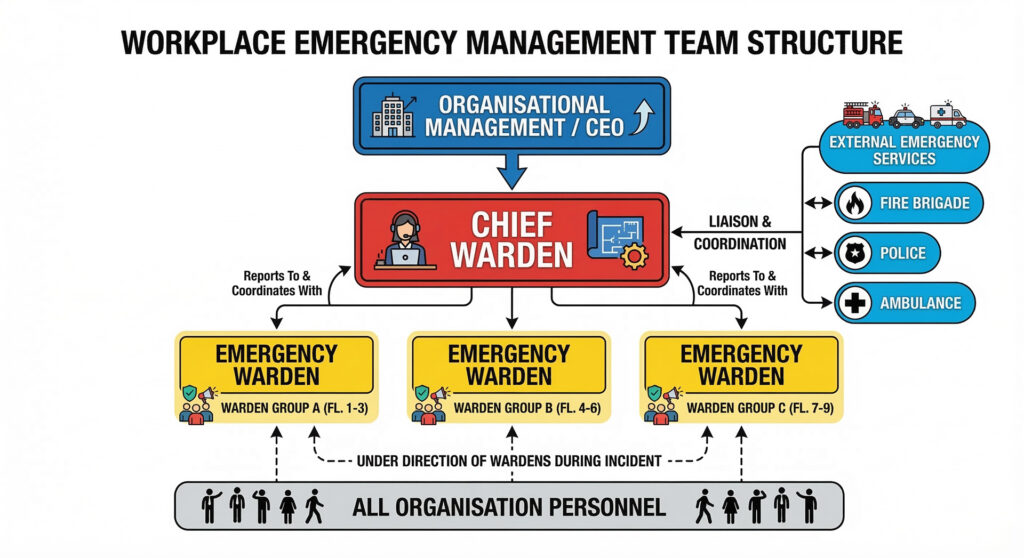
Understanding Emergency Management Roles
Emergency management roles are vital in any organisation. They ensure quick and effective responses to unforeseen events. This setup minimises harm to people and property.
The primary focus is on preparing for potential emergencies. This involves planning and organising resources. Both Chief Wardens and Emergency Wardens are integral to this process.
In Australia, workplace emergency management is governed by Safe Work Australia model WHS legislation, which requires employers to have adequate emergency plans and trained personnel in place. State regulators, including WorkSafe Victoria, SafeWork NSW, and their equivalents, each enforce these requirements within their jurisdictions.
These roles work in tandem but have distinct responsibilities. Understanding their differences is key to effective crisis management. Clarity in roles prevents confusion during actual emergencies.
Key responsibilities in emergency management include:
- Planning and coordinating emergency response activities.
- Ensuring compliance with safety regulations.
- Leading training and drill exercises.
Effective emergency management requires teamwork. Both Wardens play crucial roles in safeguarding the workplace. Collaborating well can significantly impact the organisation’s safety culture.
Chief Warden: Key Responsibilities and Duties
The Chief Warden holds a pivotal role in emergency preparedness. Their focus is on strategic oversight and coordination. This individual is the linchpin during emergencies, steering the response efforts.
Chief Wardens bear the responsibility for comprehensive emergency plans. They assess risks and update procedures regularly. This proactive approach ensures readiness at all times.
A significant duty includes coordinating with external emergency services. Effective communication with agencies like fire and police is crucial. It enhances the overall emergency response effectiveness.
Chief Wardens also play a key role in training other personnel. They ensure that everyone understands emergency procedures. This includes conducting regular drills and simulations.
Key duties of a Chief Warden include:
- Developing and maintaining emergency management plans.
- Overseeing the execution of emergency procedures.
- Liaising with external emergency services.
- Conducting risk assessments.
- Reviewing and updating emergency procedures.
- Leading training sessions for Emergency Wardens.
Leadership skills are crucial for Chief Wardens. They guide the team through crises with clear direction. This requires calmness under pressure and decisive action.
Post-incident, Chief Wardens handle debriefing and reviews. They focus on learning from incidents to improve future responses. This commitment to improvement is vital for effective emergency management.
In summary, the Chief Warden’s role is demanding yet rewarding. A strategic approach and strong leadership lead to enhanced workplace safety. Skylar Education’s Workplace Emergency Chief Warden course is designed specifically to build these capabilities through nationally recognised training.
Emergency Warden: Key Responsibilities and Duties
The Emergency Warden is at the forefront during critical situations. Their primary focus is executing emergency response plans. Quick and precise actions characterise their duties in emergencies.
Emergency Wardens ensure that everyone follows evacuation procedures. They guide people to safety with a steady hand. Familiarity with the building layout is crucial for effective evacuations.
They play a vital role in crowd control. Maintaining order during a crisis is essential. This ensures a swift and safe exit for all occupants.
During an emergency, Emergency Wardens account for all personnel. They manage headcounts and relay this information to the Chief Warden. This step is critical to ensure no one is left behind.
Key responsibilities of an Emergency Warden include:
- Leading evacuations and ensuring orderly movement.
- Assisting individuals with disabilities.
- Handling communication during emergencies.
- Ensuring emergency exits are clear and accessible.
- Reporting potential hazards to the Chief Warden.
- Providing first aid if necessary.
Emergency Wardens require excellent communication skills. They deliver clear instructions under stressful conditions. This clarity minimises panic and enhances safety.
Training is fundamental to their readiness. Scenario-based exercises prepare them for real incidents. These training sessions help refine their response strategies. Skylar Education’s Workplace Emergency Warden course covers all of these core competencies in a practical, hands-on format.
In essence, Emergency Wardens play a tactical role. They are vital during the initial response phase. Their actions significantly impact the safety and effectiveness of evacuations.
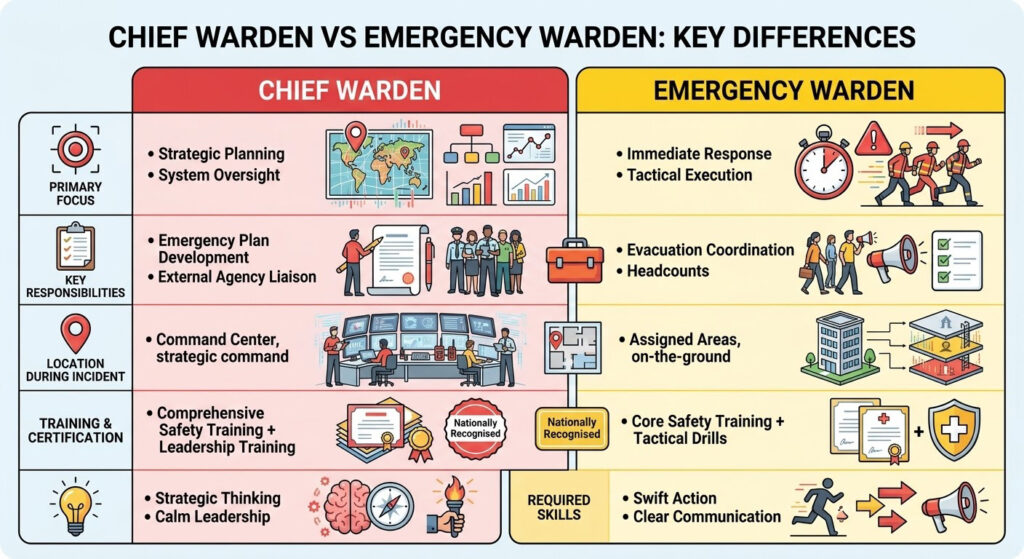
Chief Warden vs Emergency Warden: What’s the Difference?
Understanding the distinction between Chief and Emergency Wardens is crucial. Both roles are vital but serve different purposes. Their responsibilities, though interconnected, vary in scope and focus.
The Chief Warden holds a strategic position. This role involves planning and coordinating overall emergency management efforts. They lay the foundation for effective crisis resolution.
In contrast, the Emergency Warden’s role is tactical. Their primary responsibility is the immediate execution of emergency procedures. They are pivotal during the crisis itself, focusing on ensuring a safe evacuation.
Key differences include:
- Strategic vs. Tactical: Chief Wardens focus on planning; Emergency Wardens handle real-time execution.
- Planning vs. Action: Chief Wardens develop plans; Emergency Wardens act on those plans.
- Leadership vs. Guidance: Chief Wardens lead teams; Emergency Wardens guide individuals.
Communication is a common requirement for both roles. However, Chief Wardens often liaise with external agencies, while Emergency Wardens coordinate directly with building occupants.
Risk assessment and compliance fall under the Chief Warden’s purview. They ensure emergency plans are updated and regulatory requirements are met. If your organisation needs to train for both roles simultaneously, Skylar Education offers a combined Warden and Chief Warden course that covers both sets of competencies in a single programme.
In conclusion, these roles complement each other. Both are essential for a seamless emergency response, with each warden contributing uniquely to the safety of their environment.
Essential Safety Training for Chief and Emergency Wardens
Safety training is the cornerstone of effective emergency management. Both Chief and Emergency Wardens require specialised training to fulfil their roles. This training ensures they can handle a variety of emergency situations confidently.
For Chief Wardens, training focuses on broader emergency management principles. This includes risk assessment, emergency planning, and coordinating with external emergency services. It’s crucial they understand regulatory compliance and the development of emergency plans.
Emergency Wardens, however, focus on immediate actions. Their training emphasises evacuation procedures and the use of emergency equipment like fire extinguishers. Learning crowd management techniques is also vital to maintain order during a crisis. Skylar Education also offers a dedicated Fire Extinguisher and Emergency Warden course that combines both skill sets in one practical session.
Core components of safety training for both roles typically include:
- Emergency response protocols
- Fire safety and fire-fighting equipment usage
- First aid and CPR
- Communication skills under stress
Scenario-based exercises are integral to their training. These simulations mirror real-life emergencies, offering hands-on experience. By practising these scenarios, wardens can swiftly apply their training in real situations.
Training programmes are often tailored to specific environments. This customisation addresses unique hazards and safety features, ensuring wardens are prepared for any scenario. All of Skylar Education’s warden training is delivered by experienced trainers at facilities across Australia, including Melbourne, Sydney, Brisbane, Adelaide, and Perth.
In summary, comprehensive safety training equips both Chief and Emergency Wardens with the skills necessary for effective emergency response. It fosters a proactive approach, enabling them to safeguard their workplaces efficiently.
Leadership Training: Why It Matters for Chief Wardens
Leadership training is crucial for Chief Wardens. It equips them to effectively guide their teams during crises. This training focuses on critical skills that enhance their ability to lead under pressure.
A Chief Warden’s role extends beyond immediate emergency tasks. They manage broader strategic planning and liaise with various stakeholders. Thus, strong leadership skills are essential to ensure decisive and effective emergency management.
Leadership training for Chief Wardens typically covers:
- Strategic planning and decision-making
- Team management during emergencies
- Effective communication and conflict resolution
- Motivating and guiding teams under stress
These skills ensure that Chief Wardens maintain a sense of calm and control during emergencies. They lead with confidence, making informed decisions that protect both people and property.
This leadership capability is vital for orchestrating successful emergency responses. It allows Chief Wardens to inspire and direct their teams, fostering a culture of safety and preparedness within their organisations. Skylar Education’s Chief Warden course is structured to develop exactly these leadership attributes alongside the technical emergency management requirements.
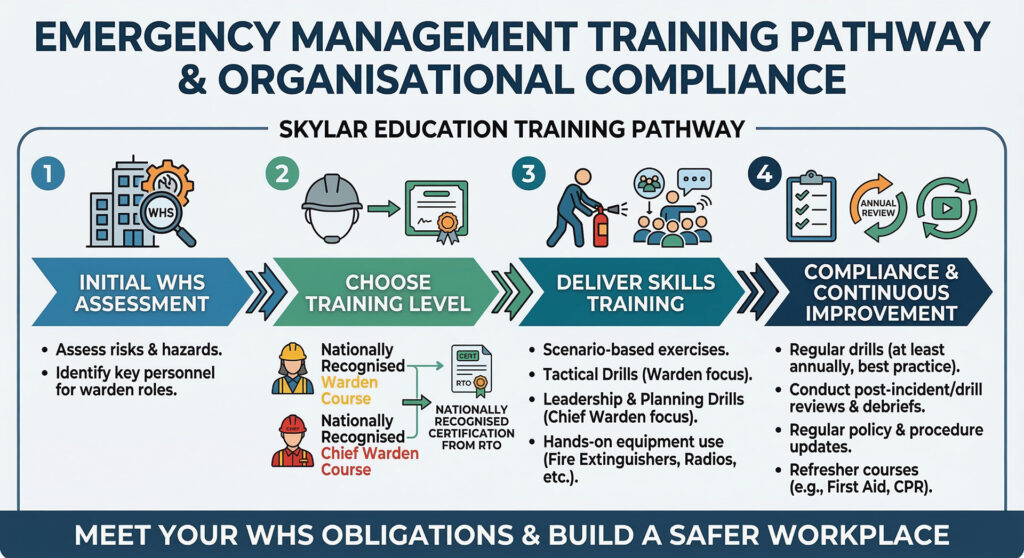
Emergency Response Procedures and Best Practices
Emergency response procedures form the backbone of effective emergency management. These procedures ensure a structured and coordinated approach to handling crises. Proper implementation can greatly reduce risks and enhance safety.
Developing comprehensive emergency procedures requires understanding potential hazards. Organisations must assess risks specific to their environment. This allows for tailored plans that address unique scenarios effectively.
Under the Work Health and Safety Regulations, Australian employers are required to prepare, maintain, and implement an emergency plan. This plan must include emergency procedures, communication systems, testing of those procedures, and information and training for workers. Having certified Chief and Emergency Wardens is a key part of meeting this obligation.
Best practices in emergency response include:
- Regularly updating and reviewing emergency plans
- Conducting drills to ensure readiness
- Establishing clear communication channels
- Providing ongoing training for all staff
Consistent practice and training are crucial for success. They help wardens and personnel remember their roles, minimising confusion during real emergencies. Organisations that invest in regular upskilling through accredited providers are better positioned to meet their WHS obligations around emergency planning.

Scenario-Based Training and Drills
Scenario-based training is integral for preparing wardens for real-life emergencies. It involves simulating incidents to test responses in a controlled setting. This training enhances both decision-making and leadership skills.
Drills provide a practical application of emergency plans. They highlight procedural strengths and areas needing improvement. Conducting regular drills builds confidence and ensures readiness.
Key components of effective drills include:
- Realistic emergency scenarios
- Participation of all personnel
- Post-drill evaluations and feedback
- Iterative improvements to procedures
Feedback from drills should be used to refine procedures. Real-world scenarios can greatly differ from plans, necessitating regular updates. By immersing wardens in lifelike situations, organisations build resilience and improve overall safety protocols. All of Skylar Education’s warden courses incorporate this hands-on, scenario-based approach, check the training calendar for upcoming sessions near you.
Continuous Improvement and Ongoing Education
Continuous learning is vital for staying prepared for emergencies. Both Chief and Emergency Wardens must regularly update their skills and knowledge.
Ongoing education ensures that wardens are familiar with the latest safety protocols. It also helps them understand new technologies and tools in emergency management.
Ways to foster continuous improvement include:
- Attending workshops and seminars
- Participating in refresher courses
- Engaging in peer discussions and networking
- Reviewing post-incident reports
Emphasising education fosters a culture of safety and preparedness. It enables wardens to adapt to changes and maintain effective emergency responses. For organisations looking to build out a broader safety capability, Skylar Education also offers First Aid and fire extinguisher inspection and testing training that complements warden certification.
Conclusion: Building a Safer Workplace Through Effective Emergency Management
Effective emergency management is pivotal in creating a secure workplace environment. Both Chief and Emergency Wardens are integral to this process.
Their collaboration ensures that each emergency scenario is managed efficiently. A well-prepared team can significantly reduce risks and potential harm.
Continuous learning and training are necessary for success in these roles. This ongoing education empowers wardens to face emergencies confidently.
By cultivating a culture of safety, organisations foster trust among employees. A prepared workforce is the foundation of workplace safety.
Ready to train your team? Explore Skylar Education’s Warden and Chief Warden courses or get in touch to discuss group training options for your organisation.
Related Content
No results found.
Related Courses
Popular
$180
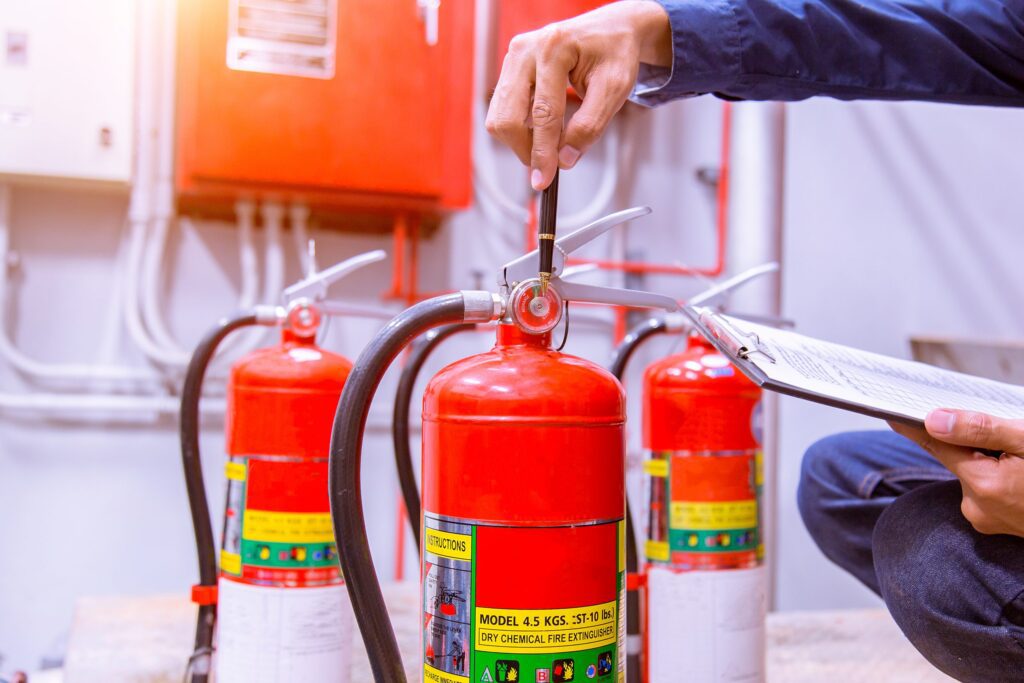
The CPPFES2020 Conduct Routine Inspection and Testing of Fire Extinguishers and Fire Blankets course provides participants with the skills and knowledge required to inspect, test, and maintain fire extinguishers and fire blankets in accordance with Australian Standards and regulatory requirements. This course is designed for individuals working in fire protection services or those responsible for maintaining fire safety equipment in their workplace.

$360
The Warden and Chief Warden course provides participants with the skills and knowledge required to effectively operate as part of an emergency control organization (ECO) during an emergency situation within the workplace. Participants will learn the roles and responsibilities of an ECO member, emergency response procedures, and how to effectively communicate and coordinate during an emergency.

$335
The Fire Extinguisher and Emergency Warden course provides participants with the skills and knowledge required to effectively operate as part of an emergency control organization (ECO) during an emergency situation within the workplace. Participants will learn the roles and responsibilities of an ECO member, emergency response procedures, and how to effectively communicate and coordinate during an emergency.